False Ceiling vs. Open Ceiling: The Comprehensive Guide for Kolkata Commercial Workspaces
 Priya Sharma
Choosing between a false (suspended) ceiling and an open ceiling is a critical architectural decision for any Kolkata office. It impacts aesthetics, acoustic comfort, maintenance requirements, and long-term HVAC efficiency.
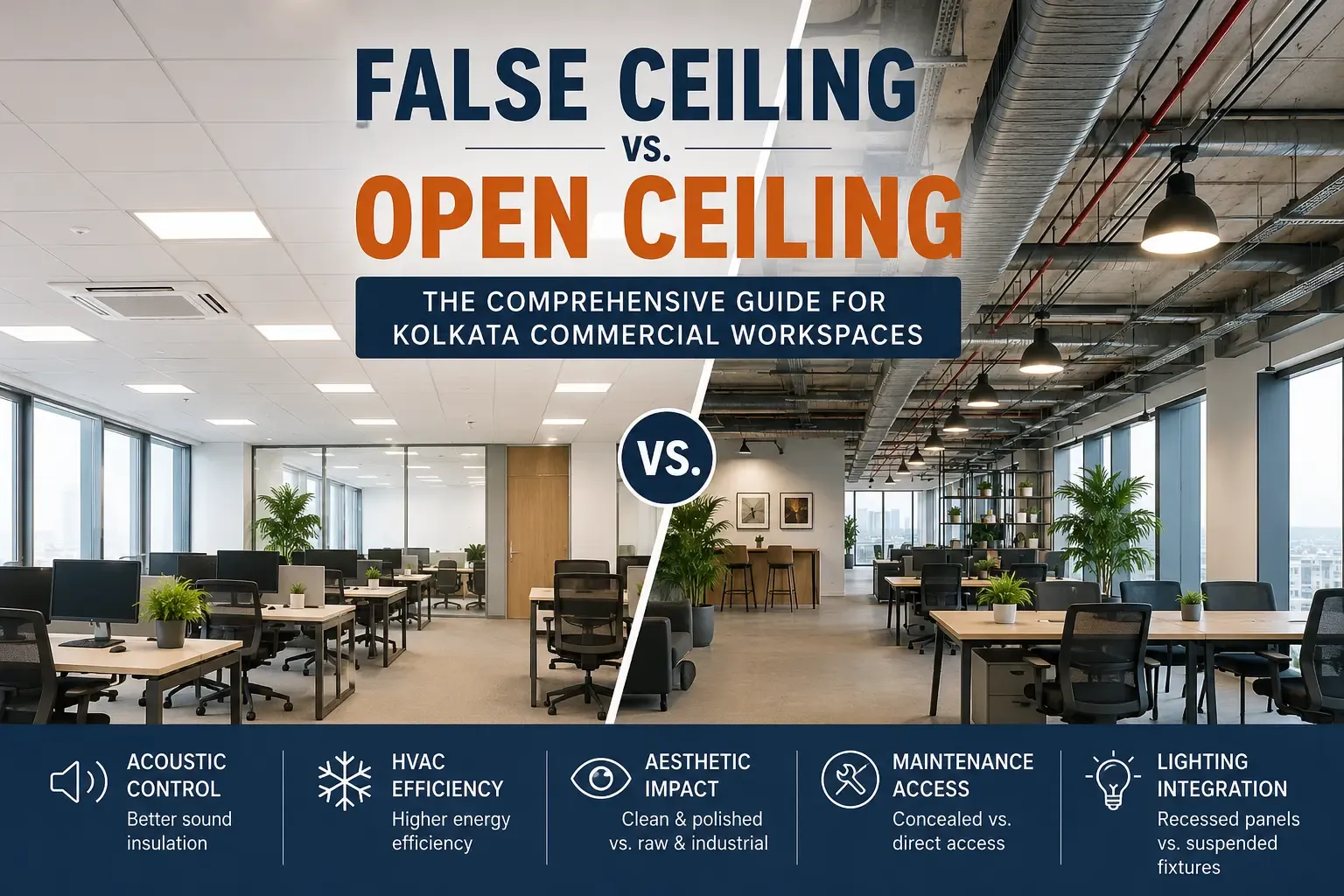
False ceilings offer superior sound insulation, energy efficiency, and a polished corporate appearance, while open ceilings create a spacious industrial aesthetic with easier access to building services and infrastructure.
The Strategic Importance of Your Ceiling
When designing a commercial workspace, the ceiling is often the largest uninterrupted visual surface in the office. It houses lighting systems, conceals mechanical services, and significantly influences how sound travels throughout the workplace.
Choosing the wrong ceiling solution can result in poor acoustics, visual clutter, and increased cooling costs, particularly during Kolkata's hot and humid summers.
False Ceiling vs Open Ceiling Comparison
- Visual Appeal: False Ceiling – Clean and professional | Open Ceiling – Industrial and modern
- Acoustics: False Ceiling – Excellent sound control | Open Ceiling – Requires acoustic treatment
- HVAC Efficiency: False Ceiling – Better energy efficiency | Open Ceiling – Larger cooling volume
- Maintenance: False Ceiling – Access through panels | Open Ceiling – Direct service access
- Lighting: False Ceiling – Recessed fixtures | Open Ceiling – Pendant and track lighting
1. The False Ceiling: Precision, Privacy, and Performance
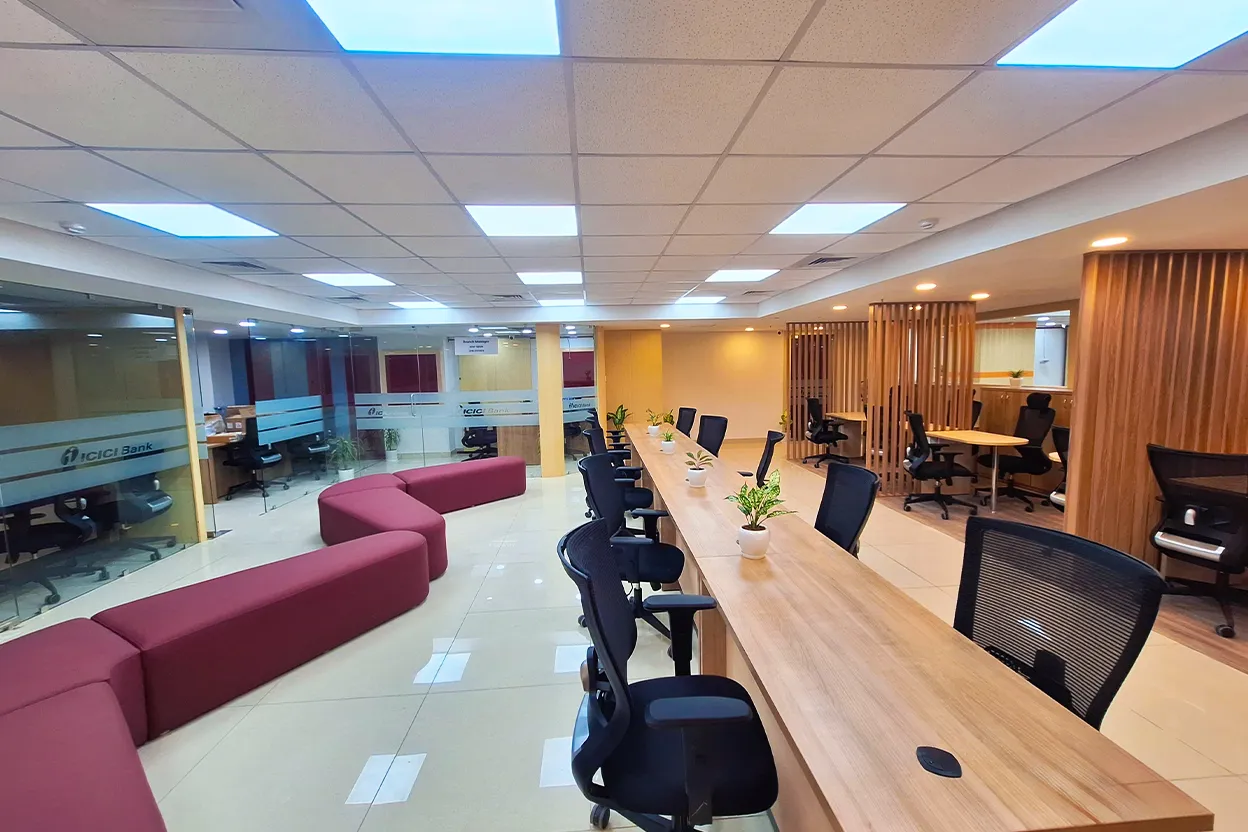
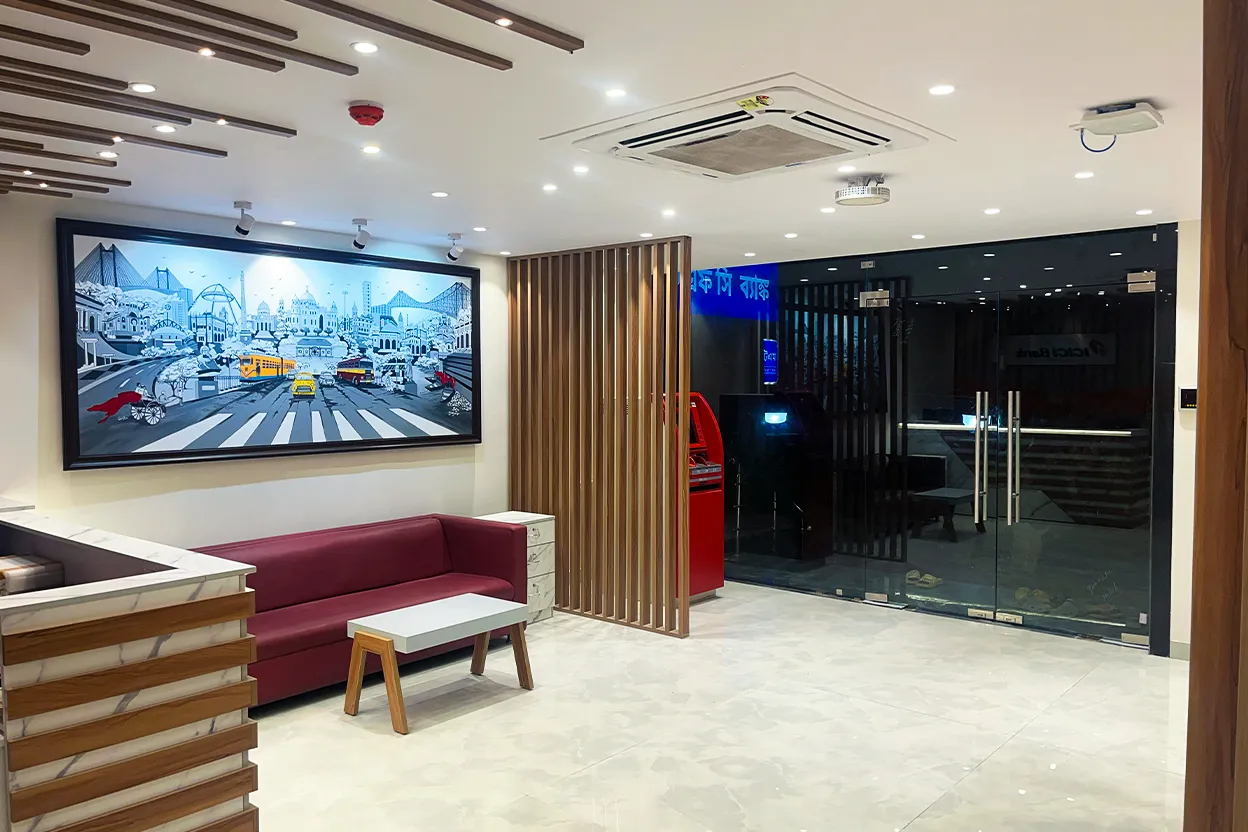
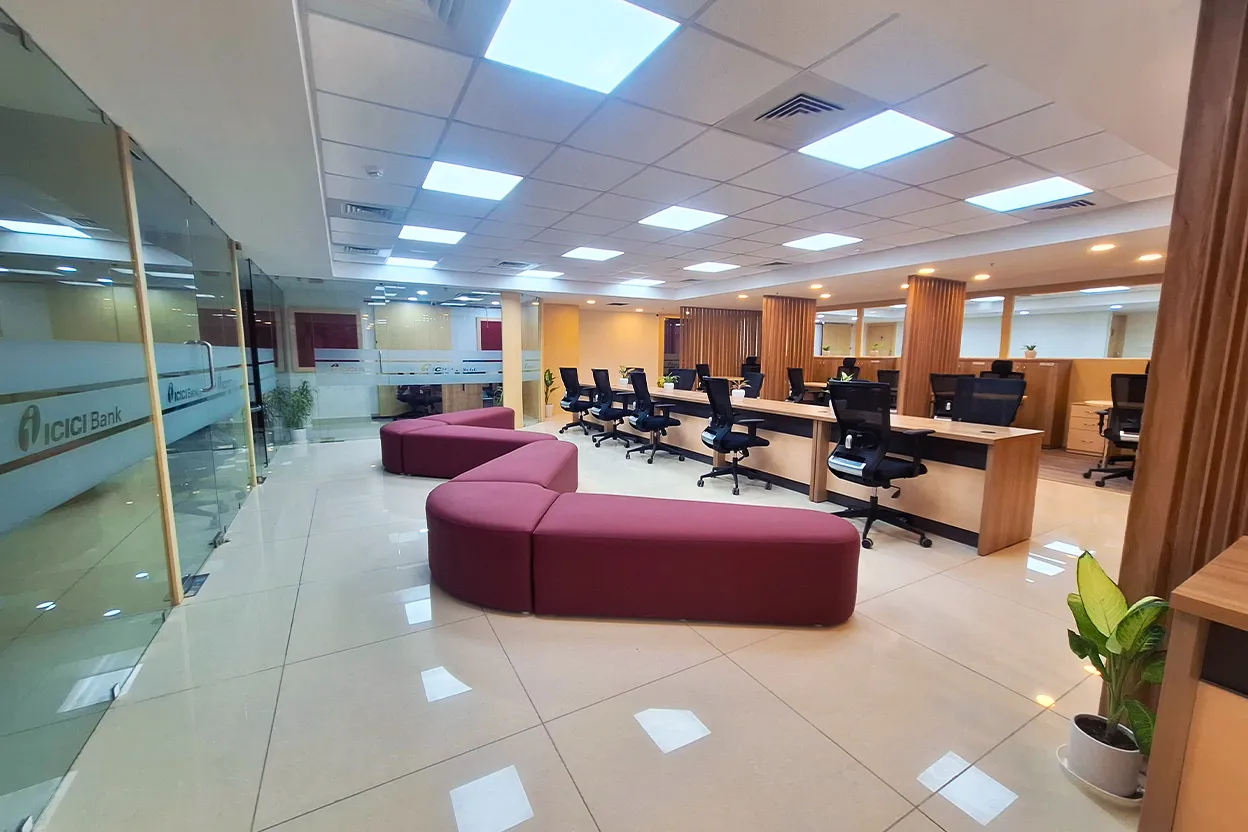
A false ceiling, also known as a suspended ceiling, is installed below the structural roof slab to create a secondary ceiling system.
Benefits of False Ceilings
- Improved Thermal Efficiency: Reduced room volume allows air-conditioning systems to cool spaces more efficiently.
- Better Acoustic Control: Helps absorb sound and reduce noise transfer between workspaces.
- Professional Appearance: Creates a clean and refined office environment.
- Moisture Resistance: Modern ceiling systems are designed to perform well in humid climates.
2. The Open Ceiling: Volume, Character, and Flexibility
An open ceiling exposes the structural slab, ductwork, pipes, electrical systems, and other building services.
Benefits of Open Ceilings
- Modern Industrial Aesthetic: Popular among technology companies, startups, and creative workspaces.
- Enhanced Spatial Perception: Creates a larger and more open environment.
- Easier Maintenance Access: Building services remain visible and accessible.
- Supports Contemporary Branding: Reflects innovation, creativity, and transparency.
Important Considerations
Achieving a premium open-ceiling design requires careful coordination of ducts, pipes, cable trays, and lighting systems. Proper planning is essential to avoid a cluttered appearance.
3. The Hybrid Ceiling Approach
Many modern offices successfully combine both ceiling styles to achieve the best balance between aesthetics and functionality.
Recommended Applications
- Open Ceilings: Reception areas, breakout spaces, cafeterias, and collaborative zones.
- False Ceilings: Boardrooms, executive cabins, meeting rooms, and focus zones.
This approach allows businesses to create visually dynamic workplaces while maintaining acoustic comfort where it matters most.
Which Ceiling Solution Is Right for Your Office?
The right choice depends on your business objectives, budget, brand identity, acoustic requirements, and operational needs.
Organizations focused on professionalism, privacy, and energy efficiency often prefer false ceilings. Businesses seeking a contemporary, creative atmosphere frequently choose open ceilings. Many modern workplaces achieve the best results through a carefully planned hybrid solution.
Conclusion
False ceilings and open ceilings each offer unique advantages for commercial office environments. Understanding their impact on aesthetics, acoustics, maintenance, and energy efficiency can help businesses make informed workplace design decisions.
By aligning your ceiling strategy with your operational goals and employee needs, you can create a productive, comfortable, and future-ready office environment.
Frequently Asked Questions
Is an open ceiling cheaper than a false ceiling?
Not always. While open ceilings use fewer materials, the additional coordination, finishing, painting, and exposed infrastructure detailing can result in costs comparable to a traditional suspended ceiling system.
How does lighting work in an open ceiling design?
Open ceilings typically use pendant lights, suspended linear fixtures, and track lighting systems that become part of the overall design aesthetic.
Does an open ceiling affect air-conditioning performance?
Yes. Because the room volume is larger, HVAC systems may need to work harder to maintain comfortable temperatures, particularly in warm climates.
Which ceiling option provides better acoustic performance?
False ceilings generally offer better sound absorption and noise control, making them ideal for meeting rooms, executive offices, and focused workspaces.
Can businesses combine false and open ceilings?
Absolutely. Many modern offices use a hybrid approach, combining open ceilings in collaborative areas and false ceilings in spaces that require privacy and acoustic control.
Priya Sharma
Senior Interior Designer
Priya specializes in modern office ergonomics and sustainable interior solutions, bringing aesthetic functionality to every project.